c14543015b8a3c7b9acbca61ccac3210478277da095a8b71da GameRev

NaissanceE is a game, a philosophical trip and an artistic experience.

A world which seems to be alive, leading the player, manipulating him and playing with him for any reason.

Men of war

Assaullt Squad 2

Pre-order

$35.99

Sonic: Lost World review: An unfortunate discovery (3DS)

Anticipating a Sonic game is like playing an inverted version of Russian Roulette. The encouraging trailer serves as the single vacant chamber, while the memories of Sonic's most disappointing outings haunt those that remain. 2010's Sonic Colors was a surprise victory, managing to marry some enjoyable new mechanics with Sonic's speedy heritage.

Initially, the 3DS version of Sonic: Lost World felt like another impending miracle, but it seems that Sonic's recent success has come to its end. Lost World follows Sonic's venture through seven themed areas in an effort to stop Robotnik and The Deadly Six from draining the energy from the world. Clearing levels requires you to successfully navigate platforms, grind-rails and twisting tunnels, all while smashing robots with Sonic's spindash attacks and collecting as many rings as possible.


Lost World mixes classic with vivid and inspired landscapes, upholding each world's themed direction well enough to keep the scenery interesting. Sky Road's sunny opening fades into casino-themed trails of nightlife, and the botanically oriented opening to Silent Forest concludes with a moonlit evasion of spotlights. The frame rate is generally up to the action, but getting hit while carrying anything more than 30 rings drops it to something resembling a flip book with a few pages missing. The cutscenes also seem pixelated and blurry, even without the 3D effect turned on.

Both 3D and 2D levels exist in Lost World and encompass the majority of the series' notable modern mechanics, including spindash attacks, running across walls and bumpers that propel Sonic onto new paths. It also grants an encore to the Wisp creatures that were introduced in Colors. Wisps can be collected from capsules and deployed as a sort of powerup - the Asteroid Wisp collects enemies and platforms into an asteroid belt and grants a floaty second jump, for example.


Although its bag of tricks is gradually implemented and occasionally interesting, many of them feel like speed traps rather than satisfying additions. I have never wished to see complex, multi-chamber switch puzzles or blockades requiring specific bodycounts to proceed in a Sonic game, and Lost World has ensured that I never will.

What's conceptually sound isn't always reliable, either. The established lock-on system used to dash into enemies with homing attacks often dropped me right in front of a monster without actually dealing damage, typically resulting in an injured Sonic and an explosion of rings. Larger foes call for a charged homing attack, which boils down to dodging other obstacles while waiting for the reticle to triple-target enemies that often block Sonic's progress through a level. The same attack can be used for targeting chains of lesser foes, too, but its choice of subjects is often astounding. I burnt many lives trying to kill a single enemy in front of me and instead rocketing after something behind the camera or sailing over a chasm toward something I had no intention of targeting.

After consecutive failed attempts, Lost World spawns a capsule containing an RC unit meant to assist with clearing a difficult section, sort of like Nintendo's Super guide. Barreling down on a pack of monsters with a toy plane in tow that's furiously coating everything in sight with missiles is immensely gratifying, but it often feels more like a solution to the broken attack mechanics than an optional aide to frustrated players. Additional RC units, along with boost items like 1-ups and auras for Sonic that act like shields or magnets for rings, can be built in Tails' workshop using elemental resources that are awarded with the completion of each level.

The series' fondness for weaving alternate paths for players to explore in future plays is present in Lost World, but the pathways merge sloppily and result in confusing mazes. I frequently backtracked through passages that I thought were ultimately leading me to a level's conclusion, only to find a bumper or speed strip encouraging progress in the direction I had just come from. Aside from the detours, the main paths suffer from the unfortunately established tradition of punishing Sonic's speed with spikes and enemies that can't be anticipated, and can only be avoided after an initial failure. Worst of all, the sections that require Sonic to smash all of its resident baddies are unavoidable, reducing portions of stages into tired button mashing until everything is dead.


There are reasons to return to previously completed levels - each stage contains five hidden red star rings, many of which are fairly difficult to find. Wisp capsules also appear in levels preceding their introduction in the game, encouraging fresh attempts in an effort to see areas that weren't immediately accessible. There are even hidden stages, which thankfully are not limited to the special world that's entirely comprised of gyro-controlled Chaos Emerald levels in space. These gyro levels fail to captivate, but the hidden levels that offer alternate, resource-stripped versions of the game's main levels offer an additional challenge. However, the fatigue inspired by persevering over the main game's downfalls doesn't leave much of a desire for more.

The most frustrating thing about Lost World is that it's not consistently miserable. There are brief sections that feel competent and structured around the game's mechanics - Sparsely placed lines of enemies that immediately work with the homing attack and serve as bridges to platforms, or stretches of ramps and rails that encourage you to run as fast as possible without hiding a "gotcha" enemy at the end to knock the rings out of you. However, these are abruptly and frequently interrupted by grating mechanics or an unwarranted "strike" from an idling enemy. Every fresh realization of an impending puzzle inspired a sigh, and I laughed in disbelief at sudden threats that the immediate surroundings encouraged me to run blindly towards.

I'm tired of resorting to the one-ring trick to survive the broken mechanics and blind hazards of a Sonic game. I want to feel satisfaction from besting a stage full of thought-out pathways and platforming opportunities, or at least survive a level without an event that makes me question its structural integrity. Unfortunately, Lost World tries to pack in so many mechanics that it suffocates the rapid-fire platforming segments, which are breathless when all the mechanics are suited to Sonic.

Via Joystiq

Top 10 Worst Video Game Transitions to the 3D World


When video games went from two-dimensional sprites to three-dimensional polygons, the potential for unique experiences increased exponentially. But not every classic franchise successfully made the jump to the third dimension. Perhaps the amount of creativity needed to completely re-envision a world may have been too much for some development teams, or perhaps the companies didn't want to bother investing the time and money necessary for the great polygonal leap. For every Super Mario 64 or Final Fantasy VII, we got plenty of three-dimensional flops like these...


10. Street Fighter EX (Arcade / PS1)
Street Fighter fared much better than Final Fight in the jump to 3D, but its transition wouldn't be quick or painless. After Street Fighter 2 and its various iterations, we saw two more 2D generations of the series —Alpha and Street Fighter 3— and the 3D spin-off, EX. While the Street Fighter EX games weren't bad, they fell short of the standards set by their 2D predecessors / competition. The graphics and gameplay didn't feel as fast or fluid as the sprites of Street Fighter Alpha, and the new characters would all be fated to fade into obscurity. It wouldn't be until Street Fighter IV that we'd see the original world warrior tournament fighter adapted successfully to 3D, when the technology was available to capture the franchise's pace with detailed, fluidly animated 3D models.
Bad Transition to 3D - Street Fighter EX (Arcade / PS1)
9. Castlevania 64 (N64)
Castlevania has always had a hard time moving to 3D, and this is severely exacerbated by the superb 2DSymphony of the Night. All Castlevania games since have failed to get out from under that title's shadow, but some of the 3D attempts have been better than others. The others, of course, are the N64 titles, which were marred by floaty controls and a frustrating camera. The games weren't terrible, but the discrepancy between the decent 3D versions and the absolutely stellar progression of the 2D series kept them from being more than footnotes in video game history.
Bad Transition to 3D - Castlevania 64 (N64)
8. Dawn of Mana (PS2)
Like Castlevania, Square Enix's Mana series (a.k.a. Seiken Densetsu in Japanese markets) has spent most of its existence in one game's shadow, in this case Secret of Mana for the Super Nintendo. While there were plenty of good Castlevania games released before and since that PS1 classic, almost all of the otherMana games have received mixed reviews at best. A particularly bad example is Dawn of Mana, released near the end of the PS2's life cycle. Though the graphics were beautiful and stylish, the game itself turned out to be a tedious trek through awkward camera angles and frustrating controls. The Action-RPG approach of previous titles was removed, and the game instead played like a mediocre platformer. As the PS2 was already on its way out by that point, one must wonder why Square Enix even bothered with Dawn of Mana.
Bad Transition to 3D - Dawn of Mana (PS2)
7. Mega Man X7 (PS2)
When Sony wanted a 3D Mega Man game for the original PlayStation, Capcom gave them Mega Man Legends. It was a fun, colorful action-adventure gem that impressed critics; however, it was a Mega Mangame by name alone, with a completely new universe and cast. Capcom tried to remedy this with Mega Man X7 for the PS2; however, "tried" is about as charitable a term as one can give this game. Not only was Mega Man X7 a hot mess of bad camera angles, finicky controls, and thoroughly pathetic bosses ("Tornado Tonion"? Really?), but it again kept fans from playing as Mega Man X, as he had to be unlocked via rescuing enough hostages. Players instead had to start by controlling second banana Zero and new character Axl, an obnoxious little punk who immediately drew fans' ire. All of this led to Mega Man X8 going back to a classic 2D side-scrolling approach, but by then the series lost all of its momentum.
Bad Transition to 3D - Mega Man X7 (PS2)
6. C: The Contra Adventure (PS1)
For fans of hardcore 2D action, there are few better choices than Contra, the first name in absurdly difficult side-scrolling shooters. The series hit its peak with Contra 3: The Alien Wars for the Super Nintendo, but that peak turned out to be a jump over a shark. The PS1 Contra games were almost universally reviled due to their glitchy, clunky controls and uninspired level design. Contra may have been difficult, but that difficulty was due to the deftly programmed challenge level, not a staggering amount of unfair glitches. C: The Contra Adventure (and Contra: Legacy of War before it) was only so hard because it was frustrating and unfun.
Bad Transition to 3D - C: The Contra Adventure (PS1)


5. Golden Axe: Beast Rider (PS3 / Xbox 360)
SEGA's beloved Genesis beat-em-up took a long time to see a next-gen release, and despite the obvious attempts at sex appeal with Amazonian protagonist Tyris Flare, the result wasn't pretty. Golden Axe: Beast Rider was a mediocre copy of God of War, with production values well below the industry standard. Worse yet, the game was single-player only, stripping it of the co-op multiplayer that made the original games so memorable. Without the ability to play with a friend, the brainlessness of the game was exposed for players to see, and no amount of nostalgia could keep players interested in this over the many other fantasy beat-em-up God of War clones on the market (including, of course, God of Waritself).
Bad Transition to 3D - Golden Axe: Beast Rider (PS3 / Xbox 360)
4. Earthworm Jim 3D (N64 / PC)
This title is an example of how extended development cycles can ruin video games. Earthworm Jim 3Dstarted development in 1996, but its progress was stalled when the original developer was swallowed up by Interplay. During that time, several of the staff got reassigned to other projects, the direction of the new Jim game changed repeatedly, and creator Doug TenNapel was inexplicably dismissed from the project. By the time Earthworm Jim 3D finally saw release, it was three years later, and the final product still felt sloppy and incomplete. The franchise went back to 2D in its next installment, but the charm instilled by the original team was gone, and Earthworm Jim remains, well, worm food.
Bad Transition to 3D - Earthworm Jim 3D (N64 / PC)
3. Sonic the Hedgehog - 2006 (PS3 / Xbox 360)
Sonic is widely regarded as the poster boy for bad 3D translations, but up until the 2006 HD game, none of the 3D Sonics were universally loathed. The Sonic Adventure titles may not have aged well, but they were strongly regarded when they released. The same cannot be said for Sonic 2006. The rampant glitches, frustrating difficulty, and amateurishly long load times could potentially be forgiven. The awful and overwrought story, complete with a disturbing romance between the cartoon hedgehog and a realistic-looking girl, cannot. Sonic 2006 remains infamous as one of the most embarrassing and half-assed releases from a respectable video game company.
Bad Transition to 3D - Sonic the Hedgehog - 2006 (PS3 / Xbox 360)
2. Final Fight: Streetwise (PS2 / Xbox)
Final Fight was never one of the greatest games ever made, but it at least offered some brainless beat-em-up fun. However, all of the endearing qualities of the old arcade game were sucked out of this console remake. The story took itself far too seriously for a franchise about beating up drag queens, 80s wrestlers, and other hoodlums, while the attempts at a robust upgrade system did nothing to alleviate the repetitiveness. Final Fight: Streetwise's programming was fundamentally broken and buried the Final Fight franchise in a sinkhole of adolescent swearing and gloomy "next-gen" brown tones.
Bad Transition to 3D - Final Fight: Streetwise (PS2 / Xbox)
1. Bubsy 3D (PlayStation)
The 16-bit Bubsy games may have been forgotten amidst the surge of other mascot-with-attitude platform games, but they were hardly bad games. With their humorous design and intense level of challenge, Accolade's bobcat games didn't deserve their premature death. However, Bubsy 3D killed the franchise like a wild animal run over by a speeding truck. With its clunky controls and crude visuals, Bubsy 3D became one of the worst reviewed games in industry history, and it retroactively tainted the poor anthropomorphic bobcat's legacy.
Bad Transition to 3D - Bubsy 3D (PlayStation)

Best Sports Video Games, EVER


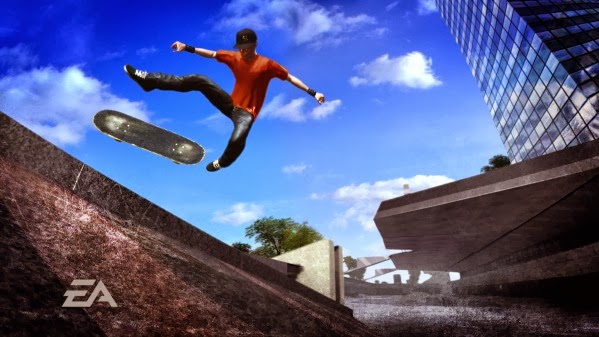
#15 EA Skate

Without a doubt, EA's "Skate" revolutionized skateboarding video games because it added unchartered levels of realism and made gamers use the joystick. With a roster full of indie skaters, an outstanding soundtrack and numerous custom options, it quickly killed off the once heralded "Tony Hawk" franchise.


#14 Gran Turismo III

If you and your friends didn't jump with glee with the release of "Gran Turismo III", your childhood may have been mediocre. The new installment was the most anticipated Sony Playstation game at the time and with unbelievable graphics and originality, it delivered and blew everyone away. It goes without saying, this game ushered in gaming's "cool" era. Which of course was much trendier than its dorky-parents-basement-era.


#13 Major League Baseball Featuring Ken Griffey Jr.

Not only was it one of the best N64 games ever made, it was one of the best baseball games ever created. The video game title all started with the Nintendo release and then ballooned into the most popular MLB video game of our generation. Needless to say the graphics got a boost as well.


#12 Mario Tennis 64

Well equipped with power-ups and all the popular characters from the "Mario Kart" series, N64's "Mario Tennis" was the first game that saw the beloved Nintendo icons jump to sports. It wasn't short on challenges such as unlocking characters and courts, to this day it still remains one of the most difficult games ever.

#11 NHL 94

Ask any NHL fan and they'll tell you - "NHL 94" set the standard for nearly two decades of hockey from Electronic Arts. Though minimalist in design, the hockey title thrived on fast and furious gameplay which more than made up for the "humble" graphic quality. It's was one of the first games that let you beat up on opposing players, outside of battle games of course.


#10 Fight Night Round 3

Boxing always had a tough time making a serious impact on the video game industry but luckily Microsoft decided to pair its latest venture - the Xbox 360 - with "Fight Night Round 3". That changed everything with joystick controls, authentic animations and EA's coveted GameFace feature. Good job Microsoft, you changed the game, literally.


#9 Backyard Sports Series

While it notoriously difficult for sports games to acquire licenses of professional leagues, the "Backyard Sports" series went with its own fictional characters while including youthful impersonations of all-star athletes. For most kids, it reinvented the sand lot. For the rest of us, it was a bit creepy. Don't they sorta look like Arnold?


#8 NBA Jam

Ever wondered where you got the phrase "Boomshakalaka!" from? "NBA Jam" of course! The arcade-style sports game spawned numerous sequels and cross-overs after its original release and all because it featured the kind of gravity-defying jumps and fireball dunks most of us only see during the dunk contest.


#7 Tony Hawk's Pro Skater 2

The original title made the world of skateboarding a little challenging with multiple tasks, but the sequel introduced a career mode and the "Create-A-Skater" and "Create-A-Park" features. It also boasted a massive soundtrack with Bad Religion, Rage Against The Machine and Naughty By Nature.


#6 MVP Baseball 2005

"MVP Baseball 2005" had everything. It had Manny Ramirez on the cover, it presented a more in-depth minor league system and even gave its "Owner Mode" a little shimmer and shine. Arguably, it was the best (and last) baseball game EA Sports ever made.


#5 Madden 2006

"Madden 2004" gets some credit for being revolutionary but the 06 take was an illustrious depiction of football. Along with introducing the "Truck Stick", the title brought forward "Superstar Mode", which allowed gamers to create their own prospect and guide them through a realistic career. From high school recruit to draft day.


#4 Tecmo Super Bowl

The difference between it and "Madden 2013" is actually tremendous but that hasn't stopped the 1991 title from letting gamers engage with a realistic season schedule. It's become so addicting that a "Tecmo Super Bowl 2012" mod showed up on the Internet last year. We sense another cult favorite in the making.


#3 NBA 2K11

Believe it or not, NBA 2K11 sold more than 5.5 million units in its first year thanks to critic and user reviews that cemented it as the best basketball game ever created. Improved graphics, mechanical gameplay and a cover featuring "His Airness" Michael Jordan was a trifecta in itself.


#2 Punch-Out!!!

It may not have been a very realistic interpretation of boxing, but "Punch-Out!!!" delivered hooks and body blows with a unique blend of characters. But most importantly, the Nintendo classic also increased Mike Tyson's cultural influence and became a cult favourite in the 1990s'. Oh Mike. . .


#1 FIFA 10

After more than a decade, the FIFA series took an unbelievable jump with FIFA 10 in 2009, improving gameplay and updating "Virtual Pro" and "Manager Mode". Focusing on realistic enhancements, the installment helped push the series to what it is now, the most realistic sports game on the planet.


Best NES Video Games Of All Time

#15 Duck Hunt (1984)

The orange gun. The flying ducks. The annoying dog that was terrible at hunting and always laughed at you when you had a bad day. All of these features made Duck Hunt an unforgettable game and a timeless childhood classic that most of us will never forget.

#14 Punch-Out!! (1987)

While it moved on to be a successful spin-off (see Mike Tyson's version) and a sequel on the Super Nintendo platform, this classic game was an introduction to fighting platforms that also introduced memorable characters and bosses that seemed almost impossible to defeat.

#13 Teenage Mutant Ninja Turtles: Turtles In Time (1991)

Also known as an arcade hit, this installment involving the Teenage Mutant Ninja Turtles is one of the best side-scrolling action games to date as the difficulty was adaptable and the gameplay was phenomonal for it's time. Plus it made us say "cowabunga" a lot.

#12 Ninja Gaiden 2: The Dark Sword Of Chaos (1990)

If you were into ninjas and throwing stars as a young kid, chances are you were into Ninja Gaiden. The series took off as soon as it was released but the most memorable installment was the second game in the franchise featured slicker controls and graphics which made Ryu's hacking and slashing way more fun.

#11 Tecmo Super Bowl (1991)

NFL games always had a hard time being enjoyable before the Madden series arrived but Tecmo Super Bowl was an instant hit the moment it shipped out to homes across North America. The only real drawback were the uniforms, like which team actually wore pink and white in the 90s'?

#10 Dr. Mario (1990)

Along with Tetris, Dr. Mario was one of the first original puzzle games that everyone knew and loved. The only problem was, most kids didn't know how to play it and were left frustrated by it's difficulty for years, and years, and years.

#9 Contra (1987)

Though Contra never really lived up to it's name after it's third version on the Super Nintendo, the original for NES set the bar for side-scrolling shooters. Collecting lives and different weapons became important and it took a unique level of skill (and a high amount of sugar) to beat levels without dying.

#8 Excitebike (1985)

Compare it to it's Nintendo 64 brother and the original 8-bit version of Excitebike wins by a landslide. The game was intuitive and addicting as it was always a competition to beat a friend's score. That is until the scores were magically erased.

#7 Double Dragon (1987)

Billy and Jimmy spawned numerous sequels and cross-overs throughout the 1990s' but nothing was more memorable than the duo's first installment for the NES that was a lengthy classic in itself. Instead of simple one-punch/kick action moves, combos were also made and those made the minds of 8-year-olds literally explode.

#6 Final Fantasy (1987)

The first edition of Final Fantasy was the game that made nerds. It created and defined the RPG genre which later led into dozens of spin-offs and other platform action puzzles like Pokemon, Kingdom Hearts and even Super Mario RPG that added a spin to the Nintendo world.

#5 Nintendo World Cup (1990)

Again, sports games were rather difficult in the NES days as graphics weren't as smooth and controls were clunky but Nintendo's first take on soccer was fantastic. Right down to the icy fields and concrete playgrounds to the players "dying" after taking too many tackles, Nintendo World Cup was addicting.

#4 Mega Man 2 (1988)

A tiny teenager with in a blue costume/helmet who could shoot lasers? WHAT? Add in simple controls, great NES music and innovative levels and Mega Man 2 still holds up as one of the best classic games out there for the Nintendo console.

#3 Battletoads (1991)

Though the Ninja Turtles were cool, Battletoads were a lot more rad. The characters - frogs and toads that wore spikes and grew giant hands and feet to destroy enemies - were way too cool to begin with but it didn't eliminate the fact that the game was ridiculously hard. Most will agree, not many made it past the second level.

#2 The Legend Of Zelda (1986)

It's hard to imagine a game like Ocarina Of Time could derive from an 8-bit NES cartridge but the first game in the series had everyone and their parents hooked on Link and his mission to rescue Zelda. It was fantasy/RPG at it's finest (no one to this day knows what those orange creatures are).

#1 Super Mario Bros. (1985)

It was the game that started it all. Looking back, the graphics weren't impressive but the idea of touching flowers and throwing fireballs at enemies was enough to keep kids hooked. Plus all of the secret passages to get to tunnels to skip levels was helpful but mostly really cool. It also spawned Super Mario Bros. 2 and 3 where both sequels topped each other with several innovations.

Grand Theft Auto V


It was after waterboarding a man with a canister of gasoline that I realized Grand Theft Auto 5 operates on its own set of rules. While other games have shied away from societal hot-buttons like torture in the past few years, developer Rockstar North runs toward these problems with a loaded weapon, an mad mob of cops in tow as businesses are being robbed and cars explode around them.

As a series, Grand Theft Auto has proudly poked the Western world about its obsessions and the things it finds offensive, offering its own slanted view of that world  a view that refuses to be dishonest. Politicians promise to nuke adversarial countries, a crowdfunding website equates its business model to panhandling, social media moguls brag about selling their users' private information, and the list goes on. Despite Grand Theft Auto's glamorization of virtual violence, which has never irked me, Rockstar's franchise has been able to withhold its likability with broad, believable worlds and a band of interesting and redeemable characters.

Grand Theft Auto 5 has difficulty with its cast, however, as the latest in the notorious series features some of the most unbearable people I've ever had the misfortune of interacting with. Thankfully, interacting with Grand Theft Auto's world is better than it's ever been


Grand Theft Auto 5 features multiple controllable protagonists, a first for the franchise. There's Michael, a family man retired from a life of crime; Trevor, the psychopath looking for the next vast adrenaline hit; and Franklin, a street-wise hustler from the block. Though each character has a valid motivation for his journey, it's difficult to desire them to succeed.

Michael's motivation is to take care of his wife and two adult children, all of whom are a chore to deal with. Living in the lap of luxury, his son and daughter whine incessantly. His wife condemns him for past mistakes, while judging his life choices and sleeping with yoga and tennis instructors. Michael's relatives are a painful bunch, and never have I dreamed so much for a immense red button to detonate the nuclear family. Trevor's motivation sways throughout, but he begins in search of the truth about a moment in his past. Saying more would spoil his story, but it's positive that Trevor is never meant to be liked, as evidenced by the morbid way his character is introduced. Franklin is the standout, a kid who wants to rise past a menial life in his aunt's house. He hews closer to Grand Theft Auto's typical path, as someone who works difficult to prove his worth to those around him  a character mighty enough to kill but not willful enough to say no when ordered around.

Grand Theft Auto 5 brings players to Los Santos and Blaine County - two regions located in San Andreas, a satirized recreation of California. Throughout the campaign you can switch between each character, and sometimes you're required to swap leads on the thesame mission. In one scenario, Trevor hovers a helicopter in place as Michael rappels down a building, every while Franklin stands watch with a sniper rifle on an adjacent roof. Switching among the trio changes the objective, keeping you on your toes and providing momentum. Multiple story missions follow this path, giving GTA's crime-focused gameplay a fresh jacket of paint.

Grand Theft Auto 5 review How to take it in America
Narrative has long been a crucial component of the Grand Theft Auto series, which prides itself on exaggerated social commentary of the Western world, but the franchise has been made well-known for its sandbox gameplay. The core of GTA remains true in the latest iteration. You can run the streets of a fully-realized world, steal cars, cause chaos and attempt to flee from an extraordinarily irritable police force.

There are yet hiccups in the formula that poke holes in the world's particular brand of realism. For example, running over a dozen civilians and accidentally bumping into a police cruiser are roughly equal in terms of illegality, as either action will summon the cops like you're public enemy number one. That silliness aside, creating a mess of trouble and seeing how long you can last against the coming onslaught of police resistance - something I've enjoyed since since GTA 3  is still thrilling.

When you tire of randomly wreaking havoc, the story is prodded along by accepting missions, and Grand Theft Auto 5 introduces a new type: heists. Heists are multi-tiered missions with big cash payouts, and they typically start with a recon overview that outlines the overall objective. Once the story behind a heist is established, you're given the chance to plan how it will play out. Two different options of execution are offered. Generally you're given a "smart" way to complete a heist that lengthens adversarial response time and initial resistance, or the "loud" way that often brings the full weight of your enemies down upon you like a hammer.


Grand Theft Auto 5 review How to take it in America


In the first heist, for example, you can use the air ducts you spotted during recon to knock out the customers and employees of a jewelry store with sleeping gas, allowing your entire crew to focus on cleaning the place out. Or you can go in noisy, forcing one of your team to withhold the crowd in check. Based on the crew you pick and how well you kill your part of the plan, your take of the payout can change. When selecting your team, you have to weigh each crew member's take  their asking price of the sum score  against their abilities, and your greed can come back to bite you if you're not cautious. During a jewelry heist, I hired a gunman with relatively low stats. His asking price was lower than someone of greater skill, but he was ultimately sideswiped by police and knocked off of his escape motorcycle  along with a million in gems. The choices you make all have their effects, running the gamut from changing the difficulty of a mission to altering how much money your crew can pull in.

That these heists can exist side-by-side with random, player-driven shenanigans is a testament to Rockstar's expertise in world-building, which is apparent in its adamancy to create heaps of peripheral content, wrapping an entire world around disparate gameplay systems. There's bad television and movies to watch. You can play a circular of golf or tennis. There are bars, shooting ranges, a seedy strip joint and an entire carnival to explore. There are even missions that can only be discovered by scratching through the surface of your character's in-game cellphone web browser. Visit a few websites, occupy out a survey and suddenly a Scientology-inspired organization takes notice of you. You can go scuba diving for love. Or maybe you'll decide to help an elderly couple collect celebrity memorabilia, culminating in a mission that has you kidnap a movie star. Purchase property and you'll unlock an entire set of new missions, like clearing out nuclear waste at the bottom of the ocean. It's all there for you to explore at your leisure  or entirely ignore. It's exactly the type of discovery you desire from an open-world game.

If these scripted experiences aren't enough, you can also take on random objectives that pop up upon the map. You could locate yourself pursuing a purse snatcher, aiding a few armed robbers that need an escape car or chauffeuring drunks looking for a ride house. Of course, how you select to complete an objective is up to you. I once chased down a stolen motorcycle for a distraught citizen, but decided the bike was too nice to return and instead added it to my own garage.


Grand Theft Auto 5 review How to take it in America
With so much to do, there's a danger of feeling bewildered, but GTA5 is never overbearing. For one, you're no longer forced to perform peripheral tasks to curry favor with other characters, one of the more onerous parts of Grand Theft Auto 4. GTA5's world exists to be played with the way you want. One component that stands out is a pair of functioning stock markets, one of which is based on global connected player interaction. If many GTA5players purchase weapons and gear at Ammu-Nation shops, for example, the company's stock will rise. Some missions even allow you to affect how the stock market reacts. I found myself cheating the system a little, picking up missions that would affect the market, restarting my game and dumping all three character's bank accounts into the company I was about to tinker with. Pieces like this add character to the world to give you a sense that life is happening around you.

The best of these components are the ones that can tie into missions, two of my favorites being piloting planes and parachuting. Combined with GTA's general freeform style, these features add a great spark to the campaign. In one mission, for example, I was asked to steal a helicopter from a heavily guarded military base. After banging my head against a wall, being gunned down time and time again, I found a parachute, stole a plane and touched down right next to my target. Grand Theft Auto 5 doesn't set limitations on how objectives are completed, and that remains one of the series' best contributions to open-world games.

Where Grand Theft Auto 5 loses its focus, ironically, is where the player has the least freedom: the story. As the three characters grow closer, the narrative goes from an interesting story of past mistakes, redemption and revenge to the story of three men screaming at each other in a seemingly endless cycle. This centers mostly on Michael and Trevor's shared history. After a lengthy time apart, emotions between the former colleagues come to a head, and GTA5 pounds at this conflict for far too long. At every turn, the pair are at each other's throats. Character development is difficult to parse as each refuses to move on from the past, reluctant to show any significant growth, and it became less and less entertaining to watch them interact with one another. Even the final heist – a colossal job that you are told will require nothing but patience and perseverance – devolves into a screaming match between the protagonists.

It's only Franklin, introduced as a kid that knows enough to survive but not enough to succeed, that achieves any meaningful growth. Franklin takes what he learns from his mentors and becomes the most mature of the trio – and ultimately the main character ofGrand Theft Auto 5.

Grand Theft Auto 5 review How to take it in America
In previous Grand Theft Auto games, the narrative is made memorable thanks in part to the slew of interesting characters that interact with the protagonist. Watching these characters react and play off a single persona helps tie the story and its cast together. Since GTA5 features three main characters with vastly different personalities, your time is split, and the narrative isn't given enough room to resonate. Peripheral characters suffer as well, with each protagonist being designated specific individuals throughout the story. You spend less time getting to know the people that make up the craziest parts of the world, which has always been one of GTA's more fascinating components.

Story complaints aside, it's the world of San Andreas that is the main attraction, and it does not disappoint. For every narrative quibble, there are dozens of discoveries to be made, and many of the best moments will be the ones you create yourself.

Grand Theft Auto 5 is an ambitious game, attempting to meld three very different characters together to tell one encompassing story of survival in what amounts to the worst place in America. That story stumbles, but the open-ended gameplay remains a showpiece for the vast amount of content that can be poured into a virtual world.


Grand Theft Auto V (5) GTA V (PC)Grand Theft Auto V (5) GTA V (PC)
This product is delivered as (CODE BY EMAIL) When you buy Code by Email goods from Oneplay, you will shortly after receive the code/ serial key for the item via email. There will NOT be sent any physical product by mail. You activate your product online and start playing right away. Download STEAM Installer here. See our FAQ for how to activate your game.   Trouble taps on your window again with this next chapter in the Grand Theft Auto universe, set in the city of Los Santos and its surrounding hills, countryside and beaches. A bold new direction in open-world freedom, storytelling, mission-based gameplay and online multiplayer, Grand Theft Auto V focuses on the pursuit of the almighty dollar in a re-imagined, present-day Southern California.

The 15 Best Video Game Duos

#15 A Boy And His Blob

A surprising fact for hardcore gamers, this particular duo actually made their debut back in 1989 in an under-the-radar title that was overshadowed primarily by “Super Mario Bros.” and “Duck Hunt”. Those who did get to the play the original title took on a quirky NES puzzler that let them take control of a boy who fed jellybeans to his favorite companion, the Blob, so he could shape-shift into different forms.

As it was still stuck in the 80s', the video game proved to be a difficult title to deal with and it wasn't until WayForward's 2009 reinvention for the Wii that fans started to appreciate the relationship between the Boy and the Blob. The remake was cute and instantly loveable as it also added a “hug” button to the gameplay controls which was only there to reinforce the friendship between the two heroes. There's no current plans for a sequel but the original NES adventure is available through the Wii Virtual Console.

#14 Yoshi And Baby Mario

Nintendo's frog-dinosaur never truly loved Mario but that didn't really matter because Yoshi became a star all on his own. The character gained popularity through “Super Mario World” and “Yoshi's World”, and even though his saddle remained permanent when he was flying solo, it just fit better when Baby Mario became his sidekick.

Adult Mario obviously contributes more (outside of sending his partner to his death just to get a little hangtime in the air) but Baby Mario was an innocent companion that made adventures feel timeless. 1995's “Yoshi's Island” took the adventure away from Nintendo's main stars and continued in 2006's “Yoshi's Island DS”, a pint-sized quest of sorts. Fans of the duo will certainly be pleased when they join forces later this year in “Yoshi's Island 3DS”, which we hope somehow features Baby Luigi, Baby Peach and Baby Bowser.

#13 Sam And Max

Believe it or not, Sam & Max are celebrating their 25 anniversary this year as the crime-solving “Freelance Police”, who first made their debut in comic books and transferred over to the video game world.

Their debut was marked in 1993 with “Sam & Max Hit The Road”, a point-and-click adventure by LucasArts that pitched the animal partners' antics against a puzzle-solving mystery that took away countless daylight hours. The title eventually spawned several sequels including three “seasons” of adventures via TellTale, the same outlet that unleashed “The Walking Dead” branch-off via online gaming in 2012. Those same three seasons of madness – that contain a total of 15 episodes – are currently available as PC/Xbox 360/Wii downloads, and though they aren't as prevalent anymore, they're still inhabitants of the gaming world. Two decades later, Max was a part of the virtual cards game “Poker Night At The Inventory” while Sam also had the opportunity to shuffle the deck in the recently released “Poker Night 2”.

#12 Lee Everett And Clementine

Sure, these two characters are almost completely brand new after being introduced last year, but Telltale did a pretty good job of creating a bond in “The Walking Dead: The Game”. In fact, their bond has set the stage for numerous upcoming zombie titles – including the open world RPG “State Of Decay” - and its partially because of their storylines.

Like most one-offs, Lee Everett could have been just another forgettable protagonist if it wasn't for Clementine, who stepped into his life to form an emotional connection in a world ridden with flesh-eating zombies. Not to point out spoilers, but their trials in surviving kept gamers on their feet as they tried to outrun the undead and prevent the allies they trusted from separating them. Everett and Clementine single-handedly took Telltale's new title to new heights, proving “mini-games” were full-length features on a smaller scale. The twosome also managed to push a rabid fan base into wanting a sequel which has promptly convinced developers to create and release a “second season” of the game.

#11 Bowser And Princess Peach

Princess Zelda and Link could have easily secured a spot on this list if their backstory didn't eerily resemble the one behind Bowser and Princess Peach. It's a funny pick but to be honest, no two characters in the gaming world have spent more time together since the 80s' than these two.

The King Of Koopas hasn't found the perfect hobby to occupy his time and prevent himself from terrorizing Mario, and Peach just can't seem to not get kidnapped. Even gaming nerds pointed out that their relationship took a pretty creepy turn in 2002 with “Super Mario Sunshine”, which introduced Bowser Jr. - a character that constantly referred to Peach as “Mama”. Nintendo denies the claims but has there ever been a video game title where the two aren't separated? When will Mario and Peach take on a quest to rescue Luigi? Signs say no time soon as the princess is scheduled to be kidnapped yet again this year in the new DLC package for “New Super Luigi”. A new “Super Smash Bros.” is also on the horizon but Bowser will probably throw her over his shoulder again just for fun.

#10 Billy And Jimmy

Reboot one of the first two “Double Dragon” games and you'll notice that the brothers quests revolved around rescuing a kidnapped friend (maybe girlfriend). That's how dedicated they were to the term “friendship”. Their partnership grew in the first title which allowed two players to take control of both brothers but it only lasted until the end of their quest, where Billy and Jimmy turned on each other to win the heart of the damsel in distress.

Their tendency to fight each other is why they're a bit low on this list but throughout time and space (literally – see 1993's "Battletoads & Double Dragon") they've found a way to put their differences aside. Plus, they must have kissed and made up given “Double Dragon Neon” featured them joining forces again after years of spin-offs and an incredible cartoon television show.

#9 Pac-Man And Ms. Pac-Man

Can an unforgettable gaming duo also be a romantic pair? While you probably wish we were taking about characters that wore caps on their head, this entry focuses on the video game world's original couple, Pac-Man and Ms. Pac-Man. Their relationship goes all the way back to the arcades of 1981, and while they never worked together as a proper tandem on-screen, they were more-than-happy to devour dots and ghosts independently in their own games.

They also kept busy off-screen as well, because let's face it: Pac-Man Jr. had to come from somewhere, right? Namco has publicly stated they're on the verge of rebooting the Pac-Man brand as a new cartoon series and a revamped 3D platformer this year, but a question still lays unanswered – will Ms. Pac-Man play a role? No one knows if the dot-eater will have a new beau but we sure hope developers make this a family affair!

#8 Bill And Lance

Before Duke Nukem, Drake and even Solid Snake, bad-assery in video games stemmed from the old-school co-op team of Bill Rizer and Lance Bean. The sweaty and sometimes shirtless soldiers descended into the depths of hell in “Contra” and did it just so they could save the world from alien scum. Unfortunately for them, “scum” didn't solely categorize outsiders that looked like ET.

The pair had to fend off a wide array of aliens throughout 12 titles, but no one will ever forget Konami's Super Nintendo masterpiece, “Contra III: The Alien Wars”. The sequel was harder than a carnival game as players had to cover each others backs like professionals just to defeat mega-bosses after mega-bosses so they could name themselves victorious. Booting up “Game Genie” allowed you to skip the trouble but the macho tag-team was all about winning and wielding weapons of destruction, which they did together until 2007's “Contra 4”.

#7 Jak And Daxter

Developed by the folks at Naughty Dog, Jak and Daxter were PlayStation's original world-saving pair. As their story goes, the two best friends got in a little over their heads one day and Jak somehow managed to get his pal morphed into the body of a half-otter/half-weasel creature.

Daxter maintained his wise-cracking sacrasm but the pair set out on a new adventure to restore him to his original form, which after a few titles – okay, maybe six in total – that goal has yet to be achieved. What gives their storyline so much intrigue is the fact that they've progressed over the years from title to title. “Jak And Daxter: The Precursor Legacy” introduced the characters to first-time players while “Jak II” and “Jak 3” scrapped humour for darker themes and more dire circumstances. The gameplay slightly improved to keep gamers interested but the characters never faded from 2001 to 2009, and there's been some E3 talk about whether the cumbersome adventurers are ready for another quest.

#6 Ken And Ryu

Next to almost every duo on this list, Ken and Ryu are more rivals than a tag-team. The great gaming pair from the “Street Fighter” series competed against each other from the start as they were constantly trying to one-up each other and even took to beating up cars and brick walls just to prove a point.

The “Street Fighter” series boosted their popularity and made them the face of the fighting genre, provoking other rivalries in titles such as “Mortal Kombat”, “Virtual Fighter” and “Tekken”. Better yet, they were often a first-pick when it came to picking up a title that included them and likely because the special “Hadoken!” move only required the commands Down, Down/Forward, Forward + Punch. Flinging the fireball proved to be a special technique when needed and it also gave fans a cheat move whenever they needed it. It didn't however solve the 25-year-old discussion of who's better: Ken or Ryu?

#5 Banjo And Kazooie

“Banjo & Kazooie” was originally blasted pretty hard from critics for being a near mimic of the “Donkey Kong” series, but eventually own over fans. Even though they went by “Banjo-Kazooie” and were a hybrid pair of a goofy honey bear and a backpack-navigating bird, its concept was entirely unique in changing the way we approach video games. For one, it steered the 3D platformer genre before the era of the Playstation 2 and the Xbox 360, and from another stand-point, it introduced an action-adventure focus to strategy. Throughout their series, Banjo does most of the legwork across areas looking for shiny collectibles while Kazooie pops out of his backpack to create a super-powered jumps and a gliding mechanism. Situated on the Nintendo 64, it also instilled the idea of taking on a video game title as a duo before “Donkey Kong 64” and other future titles came along with their own ideas. The only downside to the furry and feathery characters is that their most-recent adventure steered off the course with “Banjo-Kazooie: Nuts & Bolts”, which scrapped their teamwork in favour of vehicle construction mechanics.

#4 Sonic The Hedgehog And Tails

Cute? Very. Highly skilled characters with no sense for physics? Absolutely. Sonic The Hedgehog started off as the sole face of Sega Genesis but after his original solo act, his sequel introduced his sidekick/#1 fan/best friend Tails who adventured alongside the blue blur with his orange blur of his own.

There was quite the issue about whether or not Tails was a he or a she but he's become a staple for the video game franchise ever since as he's helped Sonic fly through the sky and take on enemies and Dr. Robotnik multiple times. As Sonic got older, Sega wound up bringing in more characters than it could handle (all except for Knuckles) – almost to the point where fans now prefer that Sonic's alone in his new adventures. Everyone still has a soft spot for Miles “Tails” Prower however. Not only is his full name a pun on “miles per hour” but plugging into the second controller to take control of the fox in “Sonic & Tails” never gets old.

#3 Donkey Kong And Diddy Kong

In the beginning of time, Donkey Kong was just an angry gorilla who rampaged about with barrels in tow and stole the girlfriend of a moustached plumber. When he finally got the reboot in 1994 with “Donkey Kong Country”, his barrel-chucking ways were accompanied by a new sidekick named Diddy, a chimp (we suppose) that cartwheeled and made hats look cool. The new tag team worked for Donkey as he was seen as a positive character in the gaming world, one who would take on an SNES platformer and use his unique abilities to deafeat baddies (and rescue his personal banana hoard).

At its peak, “Donkey Kong Country” introduced the dynamic of “slapping hands” to tag the duo in and out, which allowed gamers to use strength or agility. That feature was soon lost when Donkey got kidnapped in the sequel and even Diddy was replaced in the series' third game. The duo did make a return with all their animal friends with 2010's “Donkey Kong Returns” and that helped solidify how influential their quests through the jungle actually were.

#2 Ratchet And Clank

With a list that already includes Jak & Daxter and Banjo & Kazooie, it's hard to pass up Ratchet & Clank, a two-character 3D platform twosome that set standards and records for the PlayStation world. Not only did Insomniac Games follow the success of furry heroes like “Crash Bandicoot” and “Spyro: The Dragon”, but they created an unusual and authentic duo in a Lombax mechanic and his mechanical companion.

Ratchet & Clank also saw developers taking the teamwork aspects that built previous games and they took it the next step, which eventually spawned nearly a dozen different games in less than 11 years. Some companies consider that a little overkill but if it worked for Nintendo and Capcom, then why couldn't it work for an action RPG that pushes the mold for gaming? Fortunately, it's hard to argue against their mini-legacy as sequels are still getting greenlit to this day.

#1 Mario And Luigi

In all honesty, could there be another choice for the top spot on this list? Ranking the greatest gaming duos of all-time wouldn't be complete without the famous plumbers who helped establish video industry in the 1980s'. With their first installment, the Super Mario Bros. defined a genre with their adventures that went from flag poles and tunnels to almost every other gaming category – including racing, multiplayer and sports.

Mario's popularity helped boost the franchise and Nintendo, but Luigi added a stable balance, with his “Player 2” status that provided another character, option and personality. Nintendo recently realized this and named 2013 as the “Year Of Luigi”, celebrating titles such as “Luigi's Mansion” thanks to the duo's individual success but they've also been an iconic tag team with RPGs, “Mario Kart” and even as tennis doubles. 30 years later (after making their debut in 1983), Luigi can't exist without Mario, and Mario can't exist without Luigi.

Pearson Education (FTPress.com)